Can the concept of a “quality mindset” be universally understood across cultures and belief systems?
The answer is both enlightening and reassuring — yes, it can. A closer look at Western quality philosophy and Islamic teachings reveals a strong convergence of principles grounded in excellence, responsibility, and continuous improvement.
Understanding the Quality Mindset
A quality mindset transcends tools and certifications. It reflects commitment to excellence, continuous improvement, discipline and consistency, accountability and ownership, and value creation for stakeholders. In Western thought, these ideals are institutionalized through frameworks such as Total Quality Management (TQM), Kaizen, and Six Sigma. In Islam, quality is not merely managerial and technical — it is ethical and spiritual.

Islamic Foundations of Quality
1. Ihsan (Excellence)
“Indeed, Allah commands justice and excellence (ihsan)…”
(Surah An-Nahl, 16:90)
2. Itqan (Precision and Perfection)
“Indeed, Allah loves that when any one of you performs a task, he does it with excellence (itqan).”
(Reported by al-Bayhaqi)
3. Accountability (Hisab)
“So whoever does an atom’s weight of good will see it.”
(Surah Az-Zalzalah, 99:7)
Western Perspective on Quality
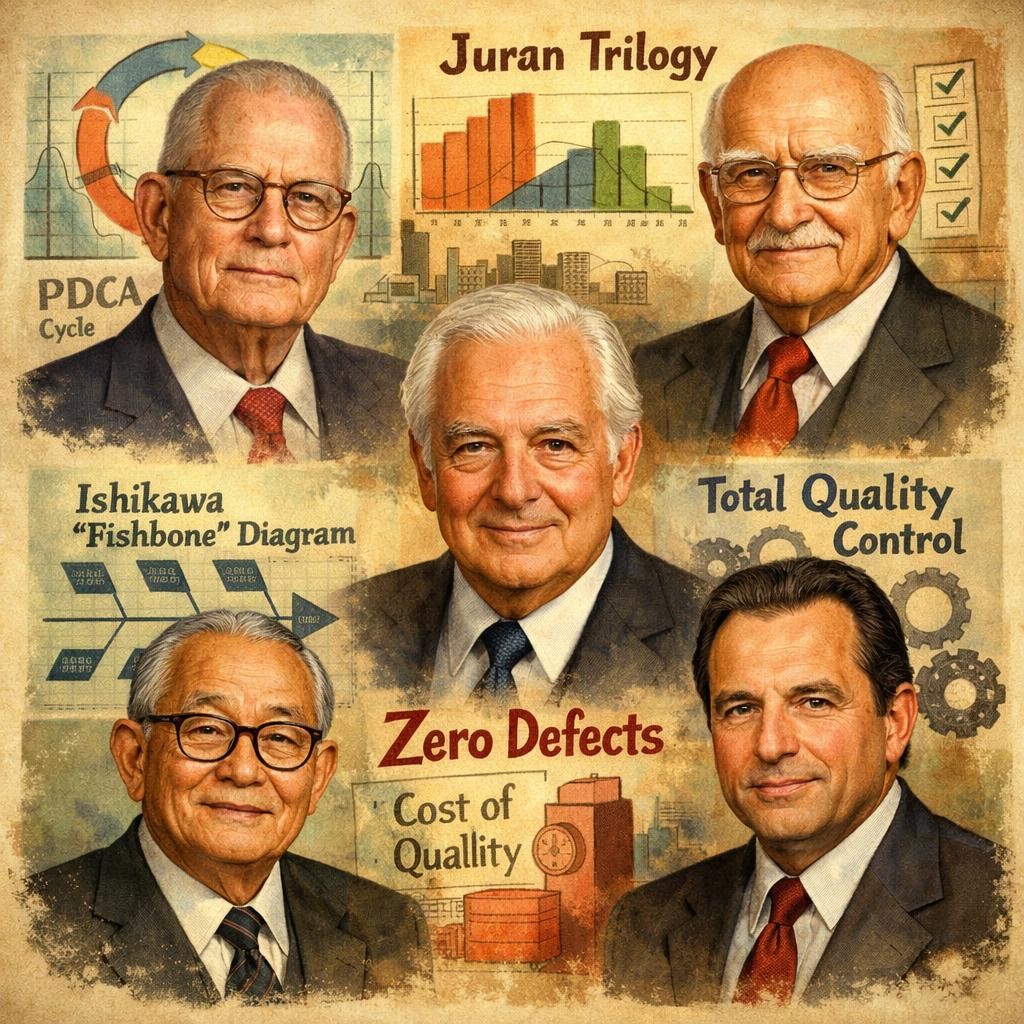
Western quality philosophy has evolved through systematic inquiry and industrial practice: Deming (1986) emphasized continuous improvement; Juran (1992) focused on fitness for use; Crosby (1979) advocated zero defects and prevention.
Convergence: Shared Principles
Despite different foundations, both perspectives align remarkably. Both reject mediocrity through commitment to excellence (Kaizen vs. Ihsan). Both sustain quality through consistency (standardization vs. Istiqamah). Both ensure accountability (governance vs. hisab). Both emphasize prevention (“do it right the first time” vs. proper niyyah). Both pursue continuous improvement (PDCA vs. tazkiyah). Both create value (customer satisfaction vs. maslahah / public good).
Conclusion
Quality is not culture-bound — it is principle-driven.
Whether framed as Kaizen or Ihsan, Zero Defects or Itqan, PDCA or Tazkiyah, the essence remains universal: do the right things, do them well, do them consistently, and do them with purpose.
Related Posts
- Monozukuri and Itqan: What Islam and Japan Teach Us About Excellence
- Exploring Wastefulness: Islamic Mubazzir and Japanese Mottainai
- Understanding Japanese Wa: The Harmony Principle in Business
Enjoyed this post? Subscribe to receive new articles on quality, manufacturing, and professional excellence — straight to your inbox.


Leave a Reply