Monozukuri and Itqan: A Shared Pursuit of Excellence
Having spent many years in Japan while maintaining my Islamic values, I have often observed striking similarities between Japanese work culture and Islamic teachings. Although Japan’s industrial philosophy emerged from cultural traditions and Islam derives its guidance from divine revelation, both emphasize discipline, responsibility, continuous improvement, and the pursuit of excellence.
Two concepts particularly stand out: the Japanese philosophy of monozukuri and the Islamic principles of itqan and ihsan.
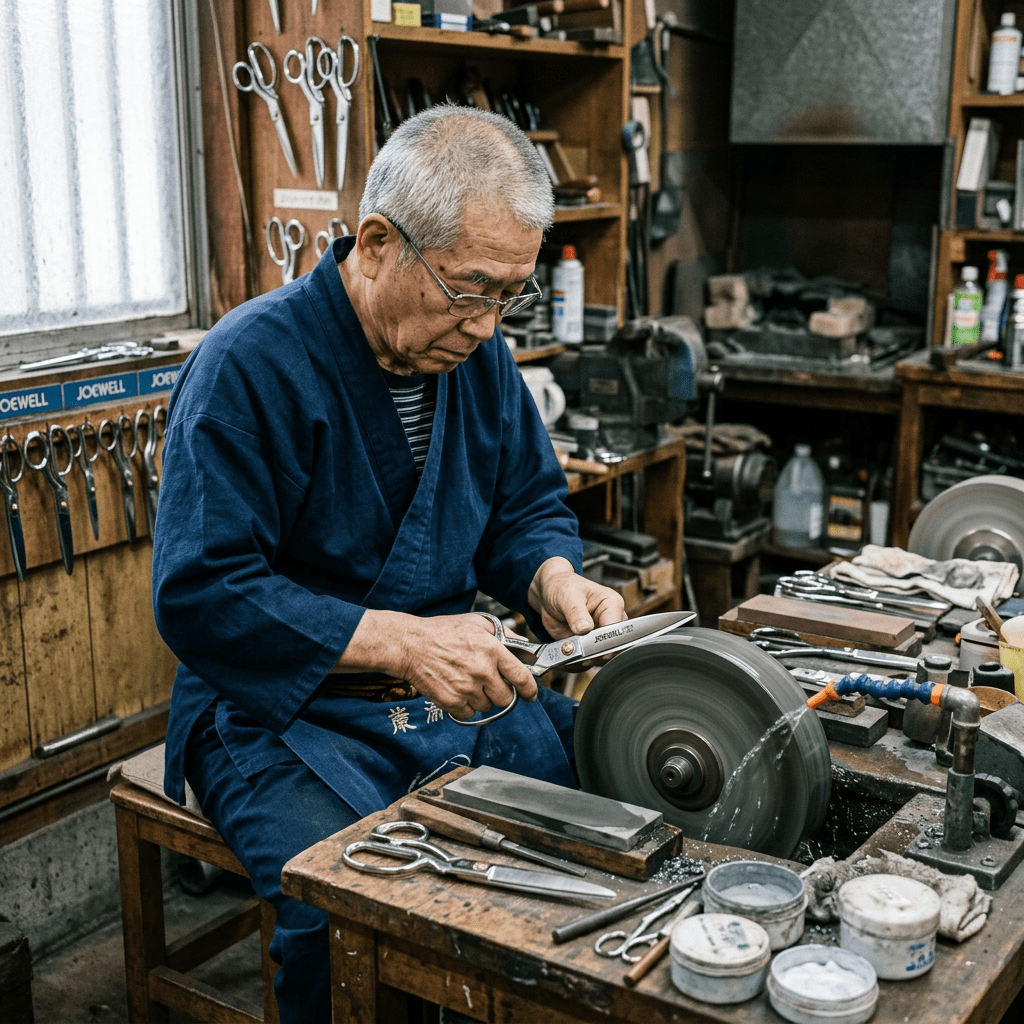
What is Monozukuri? The Art and Soul of Making Things
The word monozukuri literally means “making things” — mono (物) meaning “thing” and zukuri (作り) meaning “the act of making.” But to reduce it to manufacturing would be to miss its soul entirely.
Monozukuri is best understood as the art of manufacturing — a philosophy that fuses technical mastery, aesthetic sensibility, and moral responsibility into every object produced. It is the reason a Japanese carpenter will spend hours perfecting a joint that no one will ever see. It is why a Toyota assembly worker will stop an entire production line rather than allow a defect to pass. It is visible in the precise folding of a department store gift wrap, in the hand-finished stitching of a traditional kimono, and in the meticulous calibration of a precision instrument.
In Japan, manufacturing is not merely an economic activity. It is a cultural and almost spiritual pursuit.
The Three Pillars of Monozukuri
1. Waza — Skill and Technical Mastery
Waza (技) refers to the deep technical skill accumulated through years — often decades — of dedicated practice. The Japanese concept of shokunin (職人), the master craftsman, embodies this perfectly. A shokunin does not merely do a job; they dedicate their life to mastering it. Whether a sushi chef, a carpenter, a glassblower, or a software engineer, the pursuit of technical excellence is lifelong and unending.
This mastery is not self-glorification. It is understood as a duty to the craft itself, to the materials, and to the person who will eventually use the finished work.
2. Kokoro — Heart, Spirit, and Intention
Kokoro (心) means heart or spirit. In the context of monozukuri, it refers to the emotional and ethical dimension of making. A craftsman with waza but without kokoro produces technically correct but soulless work.
Kokoro is what compels a maker to care whether the customer is satisfied, whether the product will last, and whether the work reflects genuine effort. It is close to what we might call sincerity of intention — and it is precisely here that monozukuri and Islamic ethics find their deepest common ground.
3. Katachi — Form and Beauty
Katachi (形) refers to form, shape, and aesthetic quality. Japanese manufacturing has historically insisted that functional objects should also be beautiful. The mingei (folk crafts) movement celebrated the innate beauty of everyday handmade objects. Even industrial products — from Honda motorcycles to Muji stationery — carry this aesthetic consciousness.
This insistence on beauty is not vanity. It reflects a belief that a well-made thing honours the material it is made from, the person who made it, and the person who will use it.
Monozukuri and Its Related Philosophies
Monozukuri does not stand alone. It is deeply connected to a wider ecosystem of Japanese work philosophy:
– Kaizen (改善) — continuous, incremental improvement. Never being satisfied with “good enough.”
– 5S (Seiri, Seiton, Seisō, Seiketsu, Shitsuke) — Sort, Set in order, Shine, Standardise, Sustain. A discipline of environment and habit that enables quality work.
– Muda, Mura, Muri — the elimination of waste, unevenness, and overburden. Respect for resources and people.
– Shokunin spirit — the craftsman’s ethic of total dedication to one’s field.
– Genchi Genbutsu — “go and see for yourself.” Understanding the actual situation rather than relying on second-hand reports.
Together, these philosophies form a complete framework for excellence — one that touches not just production methods but character, discipline, and purpose.
—
The Islamic Concepts of Itqan and Ihsan
Itqan — Excellence in Action
Islam teaches a principle known as itqan (إتقان), which means performing a task with thoroughness, precision, and mastery.
The Prophet Muhammad ﷺ said:
Indeed, Allah loves that when one of you performs a task, he does it with excellence (itqan).
(Reported by al-Bayhaqi)
This hadith establishes a powerful and universal principle: every task, regardless of its apparent importance, should be performed with care, competence, and sincerity. Whether one is an engineer, teacher, manager, craftsman, researcher, or laborer, Islam encourages striving for the highest standards possible.
Excellence in Islam is not confined to acts of worship. It extends to work, business, leadership, education, parenting, and every dimension of daily life. A Muslim who performs their professional work with laziness or carelessness is, in a real sense, falling short of a spiritual obligation.
Ihsan — Excellence as a State of Being
While itqan describes the quality of an action, ihsan (إحسان) describes a deeper, more encompassing spiritual and moral state. The word comes from the root hasuna — meaning beauty, goodness, and excellence.
Ihsan is famously defined in the hadith of Jibreel, where the Prophet ﷺ was asked about it and replied:
“It is to worship Allah as though you see Him, and if you cannot see Him, then know that He surely sees you.”*
(Sahih Muslim)
This definition reveals something profound. Ihsan is not merely about doing things correctly. It is about doing them with full consciousness, as if under constant divine observation. There are no hidden corners where effort may be relaxed. There are no tasks too small to deserve full attention.
Ihsan applies equally to worship and to work. The Muslim who performs their daily prayer with ihsan concentrates fully, is present in heart and mind, and performs each movement with awareness of standing before Allah. The same Muslim who brings ihsan to their work gives full attention, maintains integrity when no one is watching, and produces work of genuine quality — not because of performance reviews or customer feedback, but because Allah sees.
Ihsan Toward Creation
Ihsan also extends outward — to people, to animals, and to the material world.
The Prophet ﷺ said:
“Allah has prescribed ihsan in all things. If you slaughter, slaughter well. Let each one of you sharpen his blade and spare suffering to the animal.”
(Sahih Muslim)
This teaching is remarkable. Even in the act of slaughtering an animal — a task that might seem purely functional — ihsan is required. The blade must be sharp. The animal must not suffer unnecessarily. Every detail matters, because every action is witnessed by Allah and affects another being.
If such care is demanded in slaughter, then surely the same standard applies to the design of a bridge, the preparation of a meal, the writing of a report, the teaching of a class, or the manufacture of a product.
Ihsan is not reserved for grand deeds. It permeates every action.
—
Similarities Between Monozukuri, Itqan, and Ihsan
1. Attention to Detail
Japanese craftsmen often spend years mastering small details — the angle of a cut, the balance of a tool, the finish of a surface.
Itqan demands that every task be completed with precision and care. Ihsan adds that this care flows from the consciousness of being observed by Allah, not merely by customers or employers.
All three traditions reject the notion that any part of the work is too small to matter.
2. Discipline and Consistency
Japanese society is widely recognised for punctuality, cleanliness, and adherence to standards. These qualities are cultivated through structured habits and systems — the 5S methodology being a visible example.
Islam cultivates similar habits through the discipline of worship: five daily prayers performed at set times, fasting with precise rules, and rituals carried out according to prescribed methods. These practices train the believer in consistency, self-control, and attention to form.
Both systems understand that excellence is a habit before it is an achievement.
3. Continuous Improvement
Kaizen holds that no process is ever fully perfected. There is always a marginal improvement to be found, a slight inefficiency to be removed, a better method to be discovered. This is not pessimism but a commitment to growth.
Islam similarly encourages daily muhasabah (self-accounting) — reflection on one’s actions, identification of shortcomings, and renewal of intention. The Companion ‘Umar ibn al-Khattab (RA) is reported to have said: “Call yourselves to account before you are called to account.”
Both traditions reject complacency. Satisfaction with today’s performance is the enemy of tomorrow’s excellence.
4. Responsibility Toward Others
Monozukuri’s focus on quality is ultimately about the person who will use the product. A defective car endangers its driver. A poorly designed tool injures its user. Quality is therefore an act of responsibility toward others, not merely personal pride.
Ihsan in Islamic ethics extends this responsibility to all of creation. The Prophet ﷺ taught excellence even in the treatment of animals before slaughter. The Muslim professional who produces poor-quality work — whether a doctor, engineer, teacher, or contractor — may harm those who depend on them, and this is a moral, not merely professional, failure.
In both traditions, quality is a form of care for others.
5. Pride in Workmanship Without Arrogance
A Japanese *shokunin* takes deep pride in their craft, but this pride is directed at the work, not at the self. The work should be excellent; the craftsman remains humble, knowing there is always more to learn.
Islam is equally concerned with this balance. Ihsan encourages the pursuit of beauty and excellence in everything — but warns against kibr (arrogance) and riya (showing off). The Muslim strives to produce excellent work for the sake of Allah, not for public recognition.
Both traditions cultivate a quiet, disciplined pride that is expressed through the quality of the work itself.
Key Difference: The Ultimate Purpose
While the similarities are significant, there is also an important difference.
In Japanese culture, excellence is often pursued for personal pride, social responsibility, organisational success, or national development. These are meaningful motivations that have produced remarkable results. But they are, ultimately, horizontal — oriented toward people and the world.
In Islam, excellence is ultimately oriented vertically — toward the pleasure of Allah. The Muslim strives for itqan and ihsan not only because it benefits customers, employers, or society, but because every act of genuine excellence is an act of worship. The quality of one’s work is part of one’s accountability before God.
This gives the Islamic concept a different quality of urgency. Monozukuri can, in principle, be relaxed when no one is watching or when economic pressures reduce its value. Ihsan, by contrast, cannot be set aside — because Allah always sees.
The destination differs, even though many of the practical behaviours appear similar.

Lessons for Modern Professionals
Engineers, managers, academics, medical professionals, and business leaders can learn from both traditions.
From monozukuri, we learn discipline, craftsmanship, systemic thinking, and the commitment to continuous improvement. We learn that quality is not an inspection at the end of a process but a culture embedded at every stage.
From itqan and ihsan, we learn that excellence is not merely a professional obligation but a moral and spiritual one. We learn that the consciousness of being observed by Allah — even in small, unseen actions — is the most powerful driver of consistent quality.
When monozukuri meets itqan and ihsan, work becomes more than productivity. It becomes a commitment to quality, integrity, and service to humanity — sustained not by external audits or incentive structures, but by conscience and faith.
In a world often focused on speed, shortcuts, and short-term results, both traditions remind us that true success comes from doing every task properly, responsibly, and with excellence.
As the Prophet Muhammad ﷺ taught, Allah loves those who perform their work with excellence. And in many ways, this principle echoes the spirit that has long driven Japan’s culture of craftsmanship — the belief that every made thing, however small, deserves the full effort of the one who makes it.
Related Posts
- Discovering Purpose: Islamic Niyyah Meets Japanese Ikigai
- Exploring Wastefulness: Islamic Mubazzir and Japanese Mottainai
- Understanding Japanese Wa: The Harmony Principle in Business
Enjoyed this post? Subscribe to receive new articles on Islamic values, Japanese culture, and excellence in work — straight to your inbox.

 Quality From Classroom to Our Life
Leave a comment