When two cultures — separated by thousands of miles — share the same quiet wisdom about human relationships

Having spent a lot of time studying Japanese management philosophy — Kaizen, Monozukuri, the concept of Wa can make us arrive at an unexpected thought: this feels familiar. The Malays and Japanese cultures are different but share something deeper — a mutual understanding that what you feel inside and what you show on the outside are not always the same thing. And that is not hypocrisy. It is wisdom.
What Honne and Tatemae Really Mean
In Japanese, honne (本音) refers to your true feelings — your raw, honest thoughts and desires. Tatemae (建前) is what you present to the world — the socially acceptable version of yourself that keeps relationships intact.
The two coexist constantly. In a business meeting, a Japanese colleague might genuinely dislike a proposal but say, “That will be muzukashii” — difficult — rather than a direct “no.” A manager who disagrees with a direction from senior leadership will not challenge it openly in the room; instead, concerns are raised quietly, one-to-one, through the nemawashi process of informal consensus-building. The meeting runs smoothly. The relationship holds. Tatemae protects honne. It is a buffer between internal truth and social harmony.
Western observers sometimes mistake this for dishonesty. That reading misses the point entirely.
Now Consider the Malay Equivalent
Jaga air muka — literally “guard the water of the face” — is our version of face-saving, and it is more layered than a simple translation suggests. Air muka captures the visible composure a person carries: the expression, the poise, the dignity that others can read. To jaga air muka is not just to protect your own standing — it is to protect the person in front of you. Imagine a staff member who presents a flawed report in a meeting. A manager who understands jaga air muka will not point out the errors in front of the group. Instead, they thank the person for the effort, move the discussion along, and address the issues privately afterwards. The correction still happens — but the person’s dignity in the room remains intact. To strip that away publicly is not just rude. It is a relational wound that Malays take seriously.
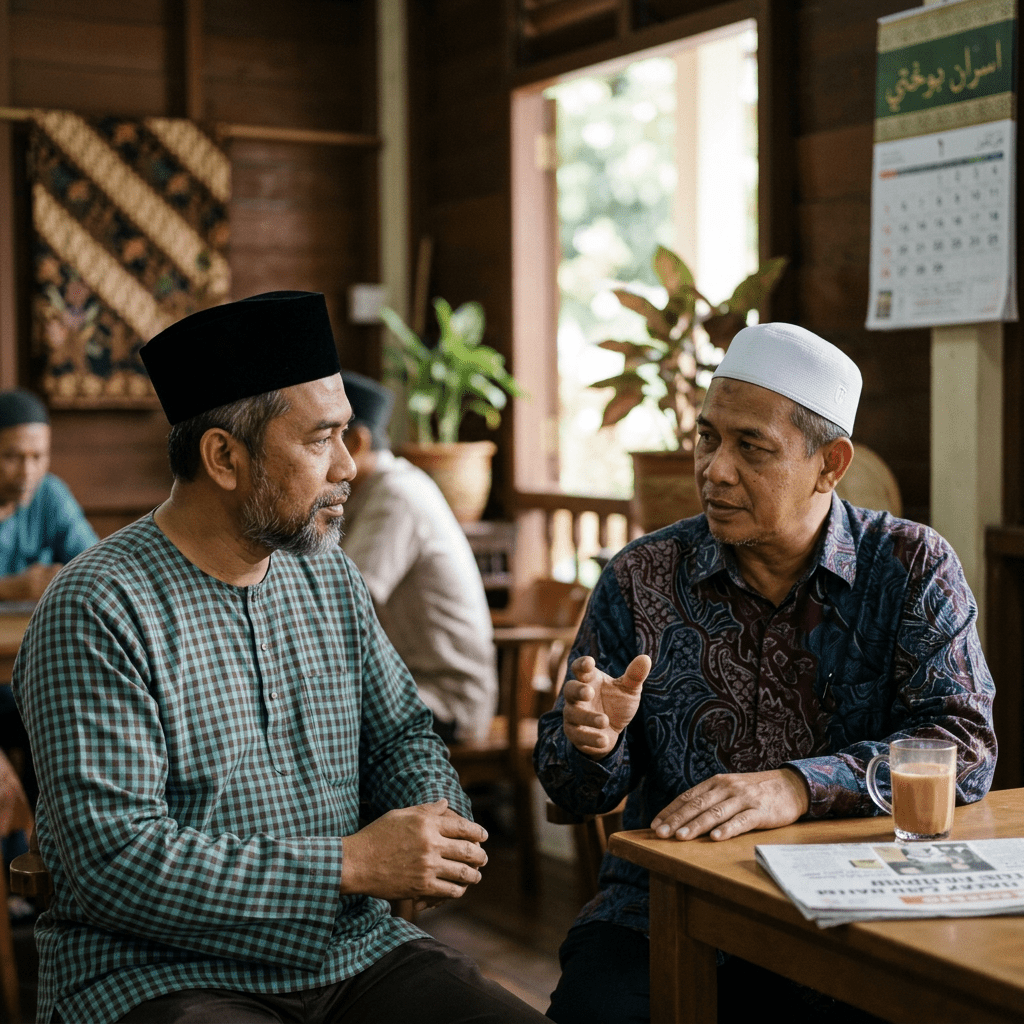
If jaga air muka is about preserving dignity, then cakap berlapik is about how we speak to get there. Literally “to speak with a layer beneath,” this peribahasa describes the Malay art of cushioning words — saying what needs to be said, but wrapped in softness, in consideration, in indirection. It is the closest thing we have to tatemae in practice. Think of a senior colleague who needs to push back on a decision from management. Rather than a direct “I think this is wrong,” they might open with acknowledgement — “Saya faham hasrat pihak pengurusan…” (“I understand management’s intention…”) — before raising concerns carefully, one layer at a time. You do not say “I disagree.” You say, “Ada juga pendapat lain yang boleh kita fikirkan” — “There are other views we could consider.” The meaning is the same. The relationship survives.
Then there is jaga hati — “guarding the heart.” Softer than cakap berlapik, this is about empathy before speech. You choose your words not because you lack opinions, but because you are mindful of how they land on another person’s hati — their heart, their feelings. In a performance review, for instance, a good Malay manager does not lead with what went wrong. They begin by recognising effort and intention, then ease into areas for improvement — not to soften the truth, but to ensure the person feels seen before they feel corrected. You might disagree with a colleague’s proposal but say, “Hmm, ada baiknya juga tu” — “there’s some good in that too” — before gently offering another direction. Jaga hati is empathy in action.
The Deeper Thread: Segan, Malu, and Indirect Communication
The Malay concept of segan captures something that Japanese people would instantly recognise — a feeling of respectful hesitance, of not wanting to impose, of holding back out of regard for someone’s position or feelings. You are segan to ask your senior a direct question in public. Not because you are afraid, but because you respect the relationship.
Malu — often translated simply as “shame” or “shyness” — goes deeper. In Malay society, malu acts as a social regulator. It keeps us from overstepping, from boasting, from drawing too much attention to ourselves. The Japanese would recognise this in their own culture’s emphasis on modesty and enryo (restraint).
And when criticism must be delivered? We often use sindiran — indirect hints, figurative language, kiasan (metaphor) — rather than blunt confrontation. A Malay elder does not say “you were wrong.” They tell a story, or offer a proverb, and let you arrive at the understanding yourself. The message lands. The dignity remains intact.
Why This Matters in the Workplace
Understanding these parallels matters deeply in cross-cultural management. When a Malay employee goes quiet in a meeting, it does not mean agreement. When a Japanese partner says “we will consider it,” it may well mean no. In both cultures, silence and softness carry weight.
Leaders who recognise this — who understand that harmony-preserving behaviour is not weakness but a form of social intelligence — will build far stronger teams. They will create environments where people feel safe enough to eventually share their honne, their real thoughts, because trust has been earned gradually, through respect and patience.
A Shared Humanity
Perhaps what strikes us most is this: two cultures, shaped by entirely different histories, geographies and religions, arrived at strikingly similar conclusions about human relationships. That the truth does not always need to be spoken loudly to be honoured. That protecting someone’s dignity is an act of care, not concealment.
Honne and tatemae. Jaga air muka, cakap berlapik, jaga hati. Different words. The same quiet wisdom.
What are your thoughts? Have you experienced moments where this cultural sensitivity — or its absence — shaped a relationship or a working environment? We would love to hear from you in the comments.


Leave a Reply